
PCA vs HHA - What’s the Difference and Which One Do You Need?
An informative guide to understanding the differences between PCA and HHA, helping you decide which caregiver service is right for you.
Understanding PCA and HHA
When it comes to home care services, two terms often come up: PCA (Personal Care Assistant) and HHA (Home Health Aide). While they may seem similar, there are significant differences that can affect your choice depending on your needs.
What is PCA?
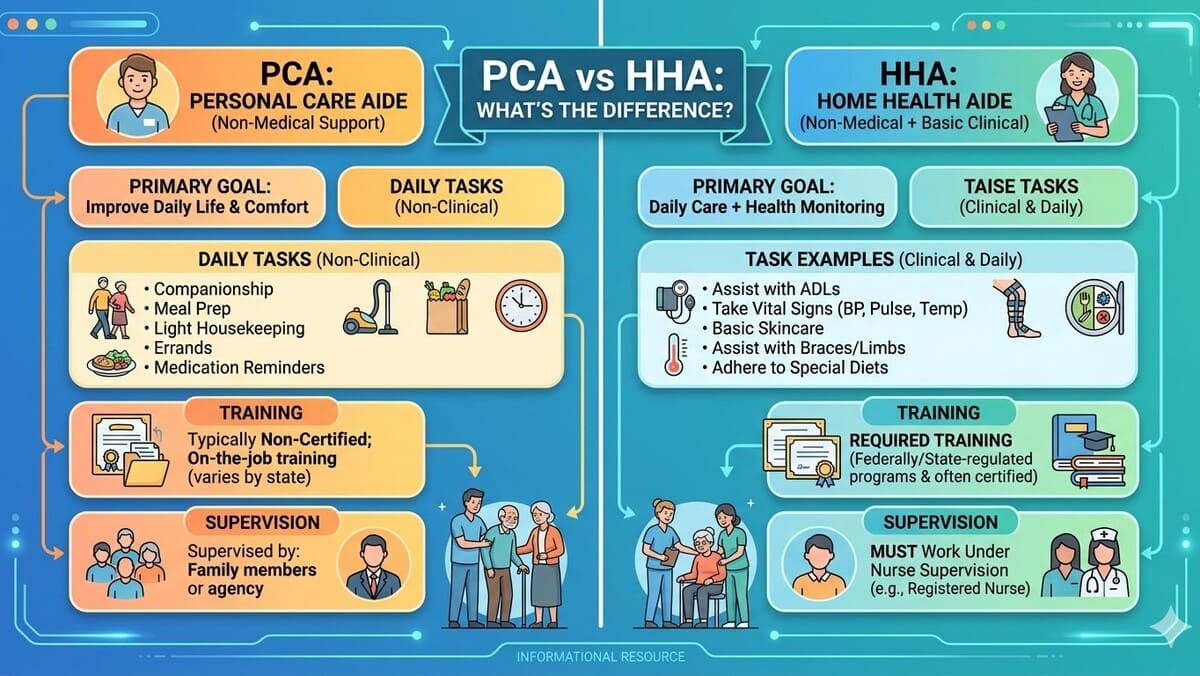
A Personal Care Assistant (PCA) provides assistance primarily with daily living activities. This can include:
- Bathing and grooming
- Dressing
- Meal preparation
- Housekeeping tasks
PCAs focus on non-medical support and are typically employed by agencies or hired privately.
What is HHA?
A Home Health Aide (HHA) can perform similar duties but also has specialized training that allows them to provide basic medical care. Services offered by HHAs include:
- Monitoring vital signs
- Administering medications
- Personal care assistance
HHAs work under the supervision of a healthcare professional, which makes them suitable for individuals with specific health care needs.
Key Differences Between PCA and HHA
Here are the primary differences between the two roles:
- Medical care: HHAs can provide medical support, while PCAs focus only on personal care.
- Training: HHAs undergo more training for medical tasks, whereas PCAs typically receive limited training.
- Employment settings: PCAs often work in private homes, while HHAs may work in home health settings or facilities.
Which One Do You Need?
The choice between a PCA and an HHA depends on your specific needs:
- If you require assistance with daily living activities but have no medical conditions, a PCA may be sufficient.
- If you need medical care or have chronic health issues, hiring an HHA can ensure you receive the necessary support.
Assess your situation to determine which option will provide the best care for you or your loved ones.